
GTA 6 Map: Every Confirmed Location in Leonida, From Vice City to Mount Kalaga
Grand Theft Auto VI is not set in a city. It is set in a state. That is the single most important thing to understand about the map, because everything else — the size, the variety, the way missions and police chases will work — follows from it. Vice City is the heart of the game, but it is one of six regions in Leonida, Rockstar’s fictional version of Florida, and the other five are not scenery between missions. They are places with their own economies, their own law enforcement, their own weather and their own reasons to go there.
Rockstar has never released a complete top-down map image, and it has published no official measurement of the world’s size. What it has done, across trailers, screenshots, the extended gameplay footage and the previews shown to journalists, is name six regions outright and fill in dozens of districts, towns, landmarks and businesses around them. This guide puts all of it in one place, sorted into three buckets: what Rockstar has confirmed, what previews and reporting have described, and what is still only rumoured. If a place is in the first bucket, you can plan around it. If it is in the third, treat it as a pencil mark until launch day on November 19, 2026.
The six confirmed regions at a glance
Leonida’s backbone is six named regions, and every source that has covered the map agrees on the list, because Rockstar itself organises its official screenshot gallery around them. Vice City is the urban core, a rebuilt Miami of glass towers, art deco beaches and nightclubs. The Leonida Keys are a tropical island chain to the south, linked by long bridges. Grassrivers is the swamp, an Everglades-style wetland of airboats and alligators. Port Gellhorn is the forgotten coast, a faded port town of cheap motels and working docks. Ambrosia is sugar country, an industrial inland town built around a refinery. And Mount Kalaga National Park is the wild north, forests and canyons on the state border.
That spread is the point. The last game gave players one city and a desert. This one gives players a city, a second smaller city, an island chain, a swamp, farmland and a national park, all inside one connected state. The launch trailer alone showed how different those places feel from one another, and the previews since have only widened the gap.
Vice City: the city at the center
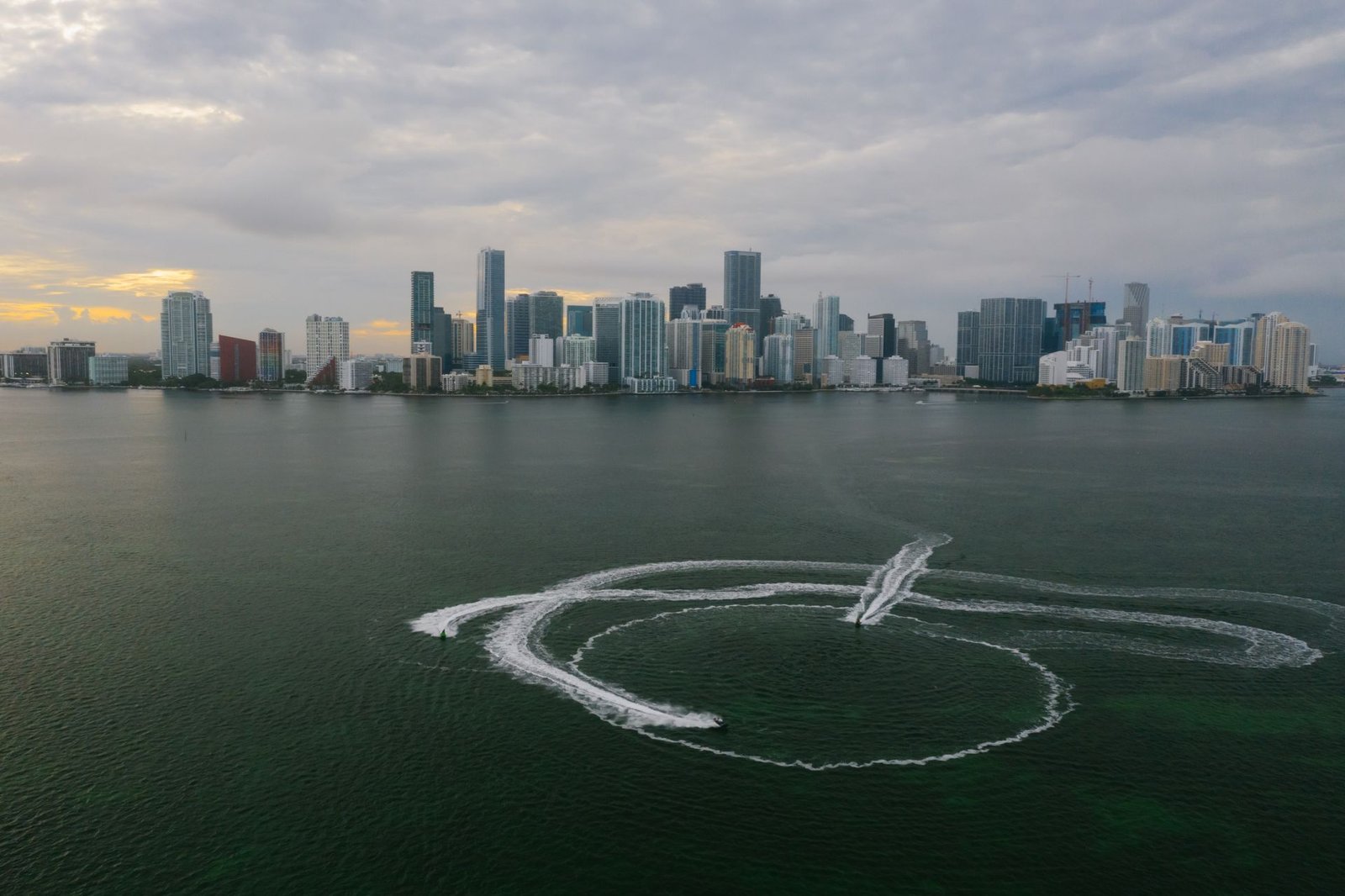
Vice City is where most of the trailers were shot, and it is the part of the map with the most detail on record. It is not the city from the original Vice City game, rebuilt at modern scale. The skyline is taller, the streets are denser, and the districts have names and identities of their own. Rockstar has officially named four areas inside the city: Ocean Beach, the pastel art deco beachfront that works as the game’s South Beach; Little Cuba, the Cuban-American neighbourhood of panaderias and coffee windows west of downtown; Tisha-Wocka, the flea market district; and VC Port, the container terminal and cruise hub.
The extended gameplay footage filled in much more. Vice Beach is the barrier island across the bay, home to the main beach strip, Washington Beach and the resort towers. Downtown is the financial core of glass towers, elevated highways and construction cranes. Stockyard is the arts district, all murals and car meets, in the style of Miami’s Wynwood. Bayside and the Rialto Islands are island neighbourhoods named on screen during the gameplay reveal. Little Haiti sits beside Little Cuba with its own murals and street-level tension. And the causeway across the bay, with its lit bridges and marina, connects the island neighbourhoods to the downtown skyline.
The named buildings are just as specific. The Victory Arms housing project opens the story at night. The Megamundo Tower has a corporate headquarters with a penthouse conference level. The Jack of Hearts is the nightclub at the centre of the city’s music scene. Hotel Dixon is the neon-signed hotel on the night beach strip. Hank’s Waffles is the diner, Zeke’s Gadgets the pawn shop, and the Malibu Club and the Vercetti Estate are callbacks that longtime fans will recognise instantly. Add a football stadium, a large amphitheater, tennis courts, a metro station and the Vice City International Airport, and the city alone has more named places than some whole games.
Leonida Keys: where the story starts
South of Vice City, across a chain of long bridges, sit the Leonida Keys. This is the Florida Keys as Rockstar imagines them: small islands, beach bars, marinas, coral reefs and seaplanes, with a pace that could not be further from the city’s neon. It matters for a reason beyond the scenery. The trailers confirm that Jason’s home is here, a stilt house on Key Lento, the game’s version of Key Largo, with Brian’s Marina and the Rusty Anchor bar nearby. The protagonists start out in the Keys rather than in Vice City itself, which means the opening hours of the game are tropical and low-key before the story pulls the pair into the city.
The Keys change how the game plays, too. Bridges become gameplay spaces: chases, escapes and ambushes on narrow spans with water on both sides. Boats matter here in a way they never did in Los Santos, and the water is not empty — the footage shows reefs, hidden coves and properties with private docks. If Vice City is where the story’s crimes happen, the Keys are where its characters live, and the contrast is deliberate.
Grassrivers: the swamp
West of the city, the map turns into water. Grassrivers is Leonida’s Everglades: sawgrass plains, mangrove tunnels, flooded marshland and airboats as a dedicated vehicle class. The trailers show Jason and Lucia powering through it in fanboats, and the previews describe it as one of the largest natural regions on the map, much bigger than early theories suggested.
This is not empty wilderness. Alligators, snakes, wading birds and boars live here, and the in-game wildlife chart lists them alongside plants and even toxic waste markers. Rural communities and trailer parks are scattered through the marsh, and the footage shows stilt camps, a small airfield and the back road toward the Keys running along its southern edge. Watson Bay, an old Gulf-coast fishing town on the edge of the swamp, holds stilt restaurants, a water tower and an airstrip, and it is where one of the edition-exclusive garages sits. The swamp is also where law enforcement barely reaches, which makes it the natural place to disappear — and, just as naturally, the place where the game’s hidden operations, from moonshine stills to abandoned cabins, are tucked away.
Port Gellhorn: the forgotten coast
On the far west coast sits Port Gellhorn, the map’s second city and the one that looks most like the opposite of Vice City. Where Vice City glitters, Port Gellhorn is faded: cheap motels, dead attractions, a working port, a trailer-park neighbourhood and industrial yards. The Starlet Motel and the Delights Cabaret are its landmarks, and the first trailer’s liquor store robbery happens here. A giant bridge and a racetrack built from famous corners sit nearby, and Draper Island, the industrial harbour side of the town, holds a paper mill, a refinery and container cranes.
Port Gellhorn is the working-class heart of Leonida’s criminal economy. Cargo moves through its docks, and the town is the natural setting for smuggling missions, dockworker contacts and cargo theft. It is also, by several accounts, where the game’s blue-collar characters feel most at home. The trailers have shown it less than Vice City, which suggests Rockstar is holding some of it back — but what has been shown is consistent: this is the coast the tourists forgot, and the game knows it.
Ambrosia: sugar country
Inland, beside Lake Leonida, sits Ambrosia, the industrial town at the centre of the state. The Allied Crystal sugar refinery dominates its skyline, and the town around it is highways, farmland, railroads and factories. Burning cane fields, a biker gang, a drag strip and a salvage yard called Wyman’s World Auto Salvage fill out the picture, and the trailers show a small-town main street with a water tower and a mural for a local Cuban food business.
Ambrosia is the buffer between the city and the north, and it plays like one: flat, open, agricultural, with the kind of long dirt roads and empty space that suit off-road driving and long-distance shooting. It is also where the game’s rural economy lives. Sugar is the industry, the refinery is the landmark, and the bikers are the local power. If Vice City is where money gets spent, Ambrosia is part of where it gets made.
Mount Kalaga National Park: the wild north
At the northern border of Leonida, the map turns into something no Florida-based game has tried before: mountains. Mount Kalaga National Park is a flat-topped peak with a red-rock canyon, waterfalls, rivers, forests and muddy off-road trails. Florida is famously flat, so this is Rockstar exercising creative licence, and the result is the game’s wilderness region — hunting, fishing, kayaking, dirt biking and hiking, with deer, cougars and foxes in the forests.
The park is also where the map’s northern settlements sit. Alligator Point is a remote cape with a lighthouse and a marina. Redhill is a mountain railroad town with a station, a rail yard and a small airfield. St. Joseph is an old north-coast port town modelled on the historic towns of Florida’s Atlantic coast. And Fairyland Forest, a wooded lake-and-river area between the park and the coast, holds reservoirs, dams and a summit the mapping community calls Mount Leonida. Expect the park to be a late-story location as much as a playground: isolation is a resource in a game about two people on the run, and there is nowhere more isolated in Leonida than its northern edge.
The smaller places worth knowing
Beyond the six regions, the trailers and previews have named a string of smaller places that fill out the state. Hamlet is the farm town at the bottom of the mainland, home to Leonida Penitentiary — the prison Lucia is held in when the story opens — along with a landmark water tower, a salon and the road south to the Keys. Waning Sands is a suburban city north of Vice City, named on a highway sign in the first trailer, with a shopping mall and planned communities. Lake Leonida, the huge lake at the heart of the map, separates Ambrosia from Mount Kalaga and is ringed by fishing cabins and a cycling trail. Capri is a western town signposted on the interstate, a mash-up of Gulf-coast pier towns and lakeside promenades. And Gloriana, a neighbouring state named on licence plates and road signs, exists in the game’s universe — though whether players will ever travel there is unconfirmed, and the smart money says not at launch.
The newest batch of screenshots added still more, including a small town’s main street and an underwater hammerhead shark, which is a reminder that the six regions are headlines, not the whole story. Rockstar has shown a lot and still has most of the map to introduce.
How big is the map, really?
Nobody outside Rockstar can give you a number, and anyone who does is guessing. The studio has never published a square-mile figure for Leonida, and the honest answer is that the number matters less than the density. But the previews have given the world a set of comparisons, and they are worth laying out because they come from Rockstar staff speaking to journalists.
The clearest comes from Edge magazine’s cover story, where the studio described the playable map as roughly twice the size of the earlier game’s world, and Leonida’s total landmass as nearly as large as the playable maps of three earlier Rockstar games combined. A separate preview, reported by Kotaku, had a Rockstar developer putting it at three times the size of the studio’s western epic, and Vice City alone at twice the size of Los Santos, with the city and its suburbs together far larger still. Those figures do not line up neatly — if the map is twice one game and three times another, the older games would have to be different sizes, and fan measurements dispute exactly that — so treat them as rounded, spoken comparisons rather than a spec sheet. The safe headline, and the one two separate previews agree on, is roughly twice the previous game.
What matters more is what fills the space. Rockstar’s development chief is reported to have told the same magazine that the game holds an order of magnitude more interiors than earlier Rockstar titles — roughly ten times as many, read literally, though no count was attached. A separate reported figure puts enterable interiors above seven hundred, covering nightclubs, strip clubs, motels, restaurants, pawn shops, supermarkets, fast food and gun stores, with working elevators in multi-storey buildings. Treat the count as reported, not official, but the direction is clear: this map is built to be walked into, not just driven across. Underwater areas are explorable, a working tram stops at the airport, and the game’s day-night cycle is reported to run substantially longer than the last game’s. A world this big also needs somewhere to put it, which is why the install size and the pre-load plan matter as much as the geography.
Counties and the law across Leonida
Above the regions, Leonida is divided into counties, most of them identified through road signs, police liveries and sheriff’s office branding. Vice-Dale covers the south-east, with Vice City as its seat, along with the beaches, the port and the airport. Leonard County sits to the north-east, around Waning Sands. Ambrosia County covers the centre, with the town and the lake. Kelly County covers the north-west, around Port Gellhorn. Mariana County covers the south-west, with Grassrivers, the Keys, Key Lento, Watson Bay and Capri. A sixth name, Lummox County, has only appeared in leaked material, so treat it as unconfirmed.
The counties are not just labels. They decide who chases you. The city has its own police; the countryside has sheriffs, and the two behave differently. The previews describe a system in which the police remember what you were wearing, whether your partner was with you, whether a camera caught you and what weapon you carried — and those details show up as icons under your wanted level. Changing clothes, splitting up from your partner or dropping your weapon can help shake a pursuit. That makes knowing the map a survival skill: where the clothing stores are, where the safehouses sit, which back roads run through the swamp and which bridges have no way off. The geography and the wanted system are the same system, and players who learn Leonida’s layout will stay free longer than players who only learn its roads.
Getting around Leonida
A map this size needs more than a fast car. The previews describe a working public transport network of buses and trains running across the state, a ride-share app that works as a kind of fast travel, and a delivery app that brings your car to you, with your weapons stored in the trunk. Vehicles are also reported to have fuel and engine-health gauges, so long drives through the Keys or up to the northern park are not free — you plan them, or you stop along the way.
Weather is part of the travel, too. Clouds move with the wind and the humidity, roads stay wet after rain, and pedestrians run for shelter when a storm rolls in. The effect is that each region feels different to cross: a wet highway through the swamp is not the same drive as a dry causeway over the bay, and a night run through Port Gellhorn’s industrial yards is not the same as a dawn run along the Keys. The map is not just big. It is different depending on where you stand, and the game wants you to feel that.
What is still unconfirmed
For all the detail, the honest ledger still has a long unconfirmed column, and it is worth keeping it in view. Rockstar has not released a full top-down map image, and it has not published an official interactive map. A complete map of Leonida did circulate online alongside leaked footage, and the publisher has issued takedown requests against copies of it — but that map is reportedly pulled from an older internal development build, which means its counties, borders and town names may not match the game that ships. Names that only appear in leaks are the most likely to change.
There is no confirmed post-launch map expansion, no confirmed travel to Gloriana, and no official count of enterable buildings. The one piece of map news that is fully official is also the most practical: Rockstar will publish a free printable map of Leonida on launch day, with a physical double-sided poster to follow for a small price. That printable map, more than any fan reconstruction, is the one worth waiting for — and the free printable map of Leonida is the version of the state you will actually be able to hold in your hands.
Where to go first: a launch-week route
Here is the part none of the map guides give you: a plan. The map is large enough that wandering aimlessly for the first few sessions means missing most of it, so it pays to cross Leonida deliberately, region by region, while the story is still opening up.
Start in the Keys. That is where the story starts anyway, and it is the best place to learn the game’s water and bridges before the city starts throwing traffic at you. Spend the opening hours on Key Lento, learn the marina and the back roads, and get comfortable with boats. Then cross the bridges north into Vice City and spend a full session on foot in Ocean Beach and downtown, going inside everything that opens — the interiors are the point, and the city is where most of them are. From there, head west into Grassrivers for a session of airboats and back roads, because the swamp teaches you the map’s other half: how to move when there are no streets. Then drive the long highway to Port Gellhorn, where the motels and docks will teach you the game’s working-class side. Save Ambrosia and Mount Kalaga for the back half of the week, when you know the roads well enough to enjoy the long drives — the refinery town by day, the national park by night, with the radio on and nothing chasing you.
It is a route, not a rule. But Leonida rewards players who treat it as a place to learn rather than a backdrop to drive through, and the first week is when that learning is cheapest. The map is the content. Learn it the way the game wants you to — one region at a time, on the ground, before the story starts moving too fast to look around.
The bottom line
Six regions, one state, and more named places than any Rockstar game has ever shipped. Vice City is the anchor, the Keys are the home, Grassrivers is the wilderness, Port Gellhorn is the working coast, Ambrosia is the industry and Mount Kalaga is the wild north. Around them sit counties, towns, prisons, lakes, airports and a port, connected by highways, bridges, buses, trains and boats. The size comparisons say roughly twice the last game, the interiors say an order of magnitude more than before, and the police system says knowing the map is a survival skill, not a trivia question.
What is confirmed is already enormous. What is still unconfirmed — the official map image, the exact size, the counties that only exist in leaks — will settle the moment the game is in players’ hands. Until then, this is the shape of Leonida: one dense modern city, a second smaller one on a forgotten coast, an island chain, a swamp, sugar country and a national park, all stitched into a single state that is comfortably bigger than anything Rockstar has shipped before. Learn the regions now, and the first drive across Leonida will feel like coming home to a place you have never been.
[…] GTA 6 Map: Every Confirmed Location in Leonida, From Vice City to Mount Kalaga […]
[…] Public transit in a Grand Theft Auto game has always been background; here it is a genuine way to move through the state, and a useful one when every camera and witness is trying to place you in a […]