
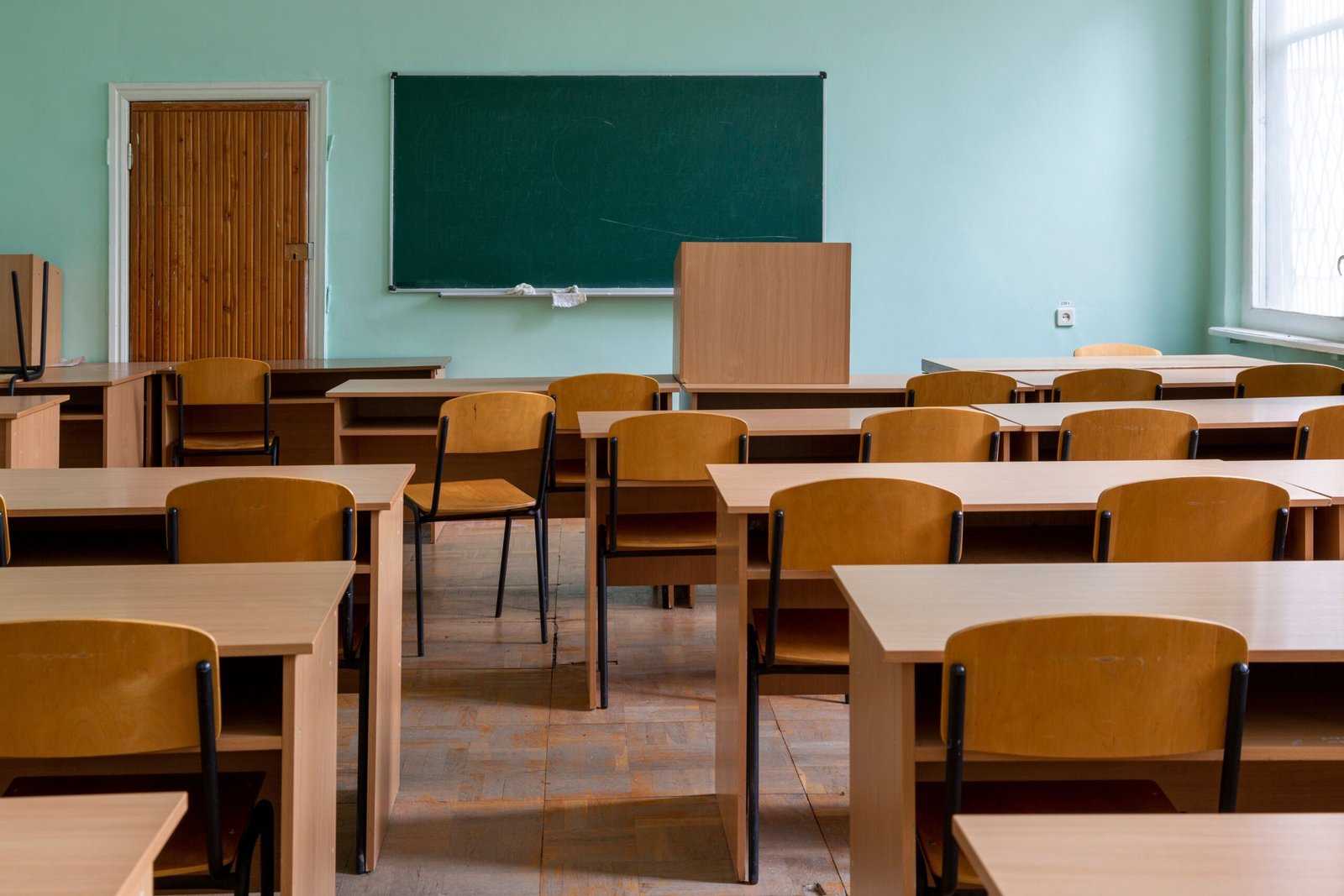
Grand Theft Auto VI did not just break sales records when it went live. It emptied classrooms. On the morning the game launched, attendance across English secondary schools fell to its lowest level in two weeks, with around 35,000 more pupils missing from their desks than usual — and the wave of empty seats and sick days did not stop at England’s borders.
Schools saw it coming. In the days before launch, headteachers wrote to parents, offered prize draws for turning up, and in one case sent a minibus out into the local community to collect missing pupils. It was not enough. When the morning registers were called, the numbers told the story plainly: the biggest entertainment launch in history had pulled tens of thousands of teenagers out of school.
This is what the attendance data actually shows, how schools tried to fight back, what it could cost the families involved, and how the same pattern played out in workplaces and lecture halls around the world.
The numbers behind the empty desks
The headline figure comes from Arbor, the school management software used by 1,415 secondary schools across England, covering more than 1.3 million pupils. Its provisional figures from the morning registers on launch day show attendance fell to 88.8 per cent.
That is a drop of 2.5 percentage points against the average attendance recorded earlier in the same week. Applied across the schools in the sample, the gap works out at roughly 35,000 more absent pupils than usual.
Measured against a different baseline, the fall looks even sharper. Attendance on launch morning sat 3.8 percentage points below the average for that weekday across the term so far, which stood at 92.6 per cent. Around 154,000 students were absent in total from the schools in the Arbor system that morning.
It was the lowest secondary school attendance recorded in England in two weeks. The figures are provisional and come from morning registers, so they capture who was missing at the start of the school day rather than who stayed away all day. But as a snapshot of a single morning, the scale is hard to argue with.
Older boys led the walkout
The absence was not spread evenly. Boys missed school at higher rates than girls in every year group, and the biggest rises came among the oldest pupils.
Year 11 boys were hit hardest in relative terms. Their absence rate climbed from 8.9 per cent to 13.8 per cent against the average for the earlier days of the same week — a rise of 4.9 percentage points, compared with a 3.4-point rise among Year 11 girls.
Year 13 boys recorded the highest absence rate of any group: 16.8 per cent, up from 10.6 per cent earlier in the week. In plain terms, around one in six Year 13 boys in the sampled schools was not in class on launch morning.
The pattern held right down the school. In Year 7, boys’ absence rose by 1.3 percentage points against 0.4 for girls. The gap between boys and girls widened with every year group, and the oldest students — the ones closest to leaving school, and the ones most likely to have their own console and their own copy of the game — stayed away in the largest numbers.
James Weatherill, the chief executive of Arbor, said the data showed attendance at 88.8 per cent, around 2.5 percentage points below the average for the rest of the week, and that the dip was largest among older pupils and boys. He added that attendance naturally varies from day to day, and that looking at it as a trend rather than a single snapshot gives schools the clearest picture of where support is needed.
What teachers saw in the classroom
The registers tell one half of the story. The other half comes from the teachers who were in the classrooms that morning.
A poll by Teacher Tapp, based on 7,678 responses from teachers, found that more than a third of secondary school teachers — 36 per cent — said there was more absence than usual. Just over half, 53 per cent, reported an increase in students talking about computer games. Around a third, 32 per cent, reported an increase in tiredness, and 17 per cent said more pupils had been late.
The effect reached beyond secondary schools. Among primary school teachers who responded, 20 per cent reported an increase in absence.
The picture the poll paints is not just one of empty seats. It is of classrooms where the pupils who did turn up were tired, late, and talking about nothing but the game. For teachers, launch morning was not a normal school day with a few extra absences. It was a day when the game dominated the room whether pupils were in it or not.
Schools fought back before launch
None of this caught schools by surprise. In the days before launch, schools across the country moved early to keep pupils in class, and the measures they took ranged from gentle encouragement to outright pursuit.
Several schools and trusts wrote to parents ahead of launch. One letter seen by Tes told families that students were expected to attend school as normal, and warned that any absence for the purpose of gaming or leisure activities would be recorded as an unauthorised absence.
Bradford Forster Academy, a secondary school in West Yorkshire, wrote to parents and carers urging them to keep regular bedtime routines in place and ensure children attended school on time. Its letter encouraged parents to discuss not only whether their child was accessing the game, but when they were accessing it and how that might affect their well-being, sleep and readiness for school. It also urged families to review parental controls and monitor gaming activity.
Other schools tried rewards instead of warnings. Some entered pupils into prize draws for vouchers if they did not miss class during launch week. St John’s Catholic School and Sixth Form College in Bishop Auckland, County Durham, told pupils who attended on launch day that they would be entered into a one-off prize draw to win a £65 Amazon voucher. Its message to students read: “We know many of our students will be counting down the days until the highly anticipated release of the GTA video game. But before you start your next mission, there’s one objective left to complete: Attend school!”
Felixstowe School and Sixth Form in Suffolk took a firmer line, telling families that a new video game release is “not an authorised reason to miss school”, and urging parents to be aware of the games their children are playing, check age ratings, and consider the risks of adult content, late-night gaming sessions, screen time and online interactions.
The most determined response came from Ninestiles Academy in Birmingham. The school sent staff out into the local community in a minibus to bring pupils to school during launch week, and adjusted its mock exam schedule to extend into the same week as part of its push on attendance. Pupils who attended every day of the week were entered into a prize draw. Principal Alex Hughes said the school had been working hard to make it a particularly engaging and positive week for learners, with careers-focused assemblies and information events, colleagues visiting the local community in the school minibus to help bring learners into school, and a prize draw for everyone who achieves full attendance across the week.
Ninestiles has not said whether any of the pupils brought in by minibus had missed class because they were playing GTA 6. But the school’s approach — going out to find absent pupils rather than waiting for them to come back — shows how seriously at least some schools took the threat to attendance.
Other schools elsewhere offered gift cards worth up to £70 to students who showed up on release day, and a professor in Spain went the other way entirely, cancelling homework and postponing an exam to give students more time to play.
The price of skipping school
For families in England, a launch-day absence is not just a missed lesson. It can carry a fine.
Parents in England can be fined if their children have unauthorised absences from school. School absence fines start at £80 per child if paid within 21 days, but a parent who receives a second fine for the same child within a three-year period can receive a £160 fine.
That is the sharp end of the warnings schools sent out ahead of launch. An absence to play a game is recorded as unauthorised, and unauthorised absence is what triggers the fine system. The schools that wrote to parents were not just asking for good behaviour. They were warning families that staying home to play could cost them money.
Whether fines will actually follow the launch-day absences is another question. The attendance data records that pupils were absent, not why they were absent, and schools log absence reasons in different ways. A pupil recorded as ill on launch morning is in a different category from one recorded as absent without authorisation, and only the second kind can lead toward a fine. That distinction is exactly why the raw numbers, striking as they are, do not on their own prove that 35,000 pupils skipped school to play.
It was not just England: the global sick-day surge
The empty classrooms in England were part of a much wider pattern. Across North America and Europe, and as far away as India and Australia, launch day brought a wave of absences from schools, universities and workplaces.
In the United States, the New York City Department of Education issued a reminder to students ahead of launch: “Unlike in video games, there are no cheat codes for attendance.” Guidance counsellors at Manhattan’s High School of Art and Design emailed families urging students to stick to their routines. A survey by HR software firm BambooHR found that 18 per cent of American workers planned to call in sick on launch day.
In Ireland, Higher Education Minister James Lawless acknowledged that university students were skipping lectures for the launch, joking that he was turning a blind eye as long as they caught up on assignments. Broadband provider Eir reported a record-breaking 25 per cent surge in fixed broadband traffic between midnight and 8am compared with the previous week, as players downloaded and started the game in the early hours.
In Canada, professors at institutions including the University of Alberta and Toronto Metropolitan University noted expected drops in lecture attendance as students stayed home. Several businesses adjusted their schedules, and Canadian truck manufacturer Edison Motors closed operations for two days after receiving an unusually high number of leave requests.
Workforce platforms tracking India and Australia reported similar disruption worldwide. Global HR data showed a 17 per cent to 29 per cent spike in leave requests for launch day, prompting companies such as Logitech and Indian electronics brand boAt to grant staff an optional or paid day off for the launch.
Some workplaces went further than a day off. A California-based car company gave employees the day off to play, a United States Army unit offered troops a four-day pass to play the game as part of its incentives to re-enlist, with 20 soldiers taking up the offer, and a KFC in Australia hosted a funeral for a fake person, just so customers had a valid reason to take the day off work.
The debate: choice, accountability and precedent
The attendance figures have already sparked an argument about who is responsible when pupils choose not to come to school.
Sam Strickland, principal of The Duston School in Northampton and chief executive of the Luminara Education Trust, posted that many schools saw a dip in pupil attendance due to the release of GTA, a game rated 18, and that this was one example of many where pupil absence is a choice. Schools cannot be held accountable where pupils choose not to come to school, he wrote.
Pepe Di’Iasio, general secretary of the Association of School and College Leaders, made a similar point in different terms. Grand Theft Auto has an age certificate of 18 and has therefore been deemed unsuitable for school-age children to play, he said. Schools are focused on ensuring good attendance at all times of the academic year, as they know how important it is for learning and outcomes, and many have existing measures in place to promote it. But school absences are often the result of external factors outside a school’s control, he added, and parents should work with schools in promoting the benefits of attendance alongside other good habits such as a wide range of age-appropriate hobbies with limited time spent on screens.
A spokesperson for the Department for Education said every day in the classroom matters, and that headteachers are best placed to determine the best ways to support children to attend school. The spokesperson added that since setting its attendance target, the department has recovered 4.4 million days in school, and that it is tackling the root causes through measures including free breakfast clubs in every primary school, an attendance mentoring programme, and earlier intervention in mainstream schools for pupils with special educational needs.
The department has also published research showing that one-off events can move attendance figures. Its earlier work found that absence among Year 9 and Year 10 girls in Liverpool rose by between two and four percentage points on the Friday following a Taylor Swift concert in the city, compared with surrounding Fridays. A game launch is a different kind of event, but the pattern is the same: when something big happens outside school, the registers feel it.
The launch behind the absences
None of this happens without a launch of extraordinary scale. GTA 6 went live on November 19, 2026, on PlayStation 5 and Xbox Series X|S, and the numbers around it explain why schools were bracing for impact.
Rockstar Games and Take-Two Interactive announced that the game generated $3.79 billion in worldwide retail sales on its first day, including 32.5 million pre-release units sold — the biggest entertainment launch in history. That figure is nearly five times the roughly $800 million GTA V made in its first 24 hours, and it passed the entire lifetime box-office collection of Avengers: Endgame, which took around $2.9 billion.
The critical reception matched the commercial one. GTA 6 scored 99 on Metacritic, the highest score ever given to a game, with critics praising a world that felt alive in ways no open-world game had managed before. The launch also broke every streaming record, with 7.88 million people watching at once across Twitch, YouTube and Kick.
The launch was not without its problems. Some players on PlayStation 5 hit a game-breaking crash, error CE-108255-1, with no fix available, and the launch produced its share of stranger stories too — including a Neuralink patient playing GTA 6 using only his thoughts, with no controller at all. But the scale of the launch is what drove the absences: when tens of millions of people are playing the same game on the same morning, classrooms and offices are going to feel it.
What the numbers can and cannot prove
The attendance figures are striking, but they deserve an honest caveat. The Arbor data covers 1,415 secondary schools in England — fewer than half of the country’s secondary schools — and the 35,000 figure is arithmetic inside that sample, not a national count. The national excess is unknown, and almost certainly larger than the figure in the headline.
Just as importantly, the registers record that pupils were absent, not why they were absent. Morning-register data does not say whether a missing pupil was ill, dealing with an authorised family matter, or staying home to play. Schools log those categories differently, and that distinction is precisely what decides whether an absence counts as unauthorised — and whether a fine can follow.
What the data does prove is that attendance fell sharply on launch morning, that the fall was concentrated among older boys, and that teachers on the ground saw the same pattern in their own classrooms. Combined with the warnings schools sent out before launch, the voucher draws, the minibus, and the sick-day surge reported in workplaces on three continents, the picture is consistent: GTA 6’s launch was big enough to move the morning registers.
Schools knew it was coming. They wrote the letters, offered the vouchers and sent out the minibus. And still, around 35,000 extra desks sat empty. For a game that had already broken every sales record, the empty classrooms may be the clearest measure of all of just how many people were playing instead of working — or learning.
Sources
- Tes — “Tens of thousands more pupils absent on GTA VI release day” — Arbor attendance data, Teacher Tapp poll, school letters, fines, Department for Education research
- BusinessToday — “Mad rush: GTA 6 launch saw 35,000 students skip schools in UK & sparked global sick-day surge” — Arbor figures, global absences, BambooHR, Eir, Edison Motors, sales figures
- Dexerto — “School sends out minibus to catch absent pupils playing GTA 6” — Ninestiles Academy minibus, Alex Hughes quote, workplace stories
- Glasgow Times (PA) — “Schools offer pupils incentives not to skip class to play Grand Theft Auto” — school letters, voucher draws, ASCL and Department for Education quotes
- Pragativadi — “GTA 6 Launch Sparks Global School & Workplace Absences” — Arbor figures and global roundup
- Rockstar Games / Take-Two Interactive (via BusinessToday and Pragativadi) — $3.79 billion first-day retail sales, 32.5 million pre-release units sold
[…] reading: the launch emptied classrooms too — 35,000 extra pupils were absent in England on launch […]