
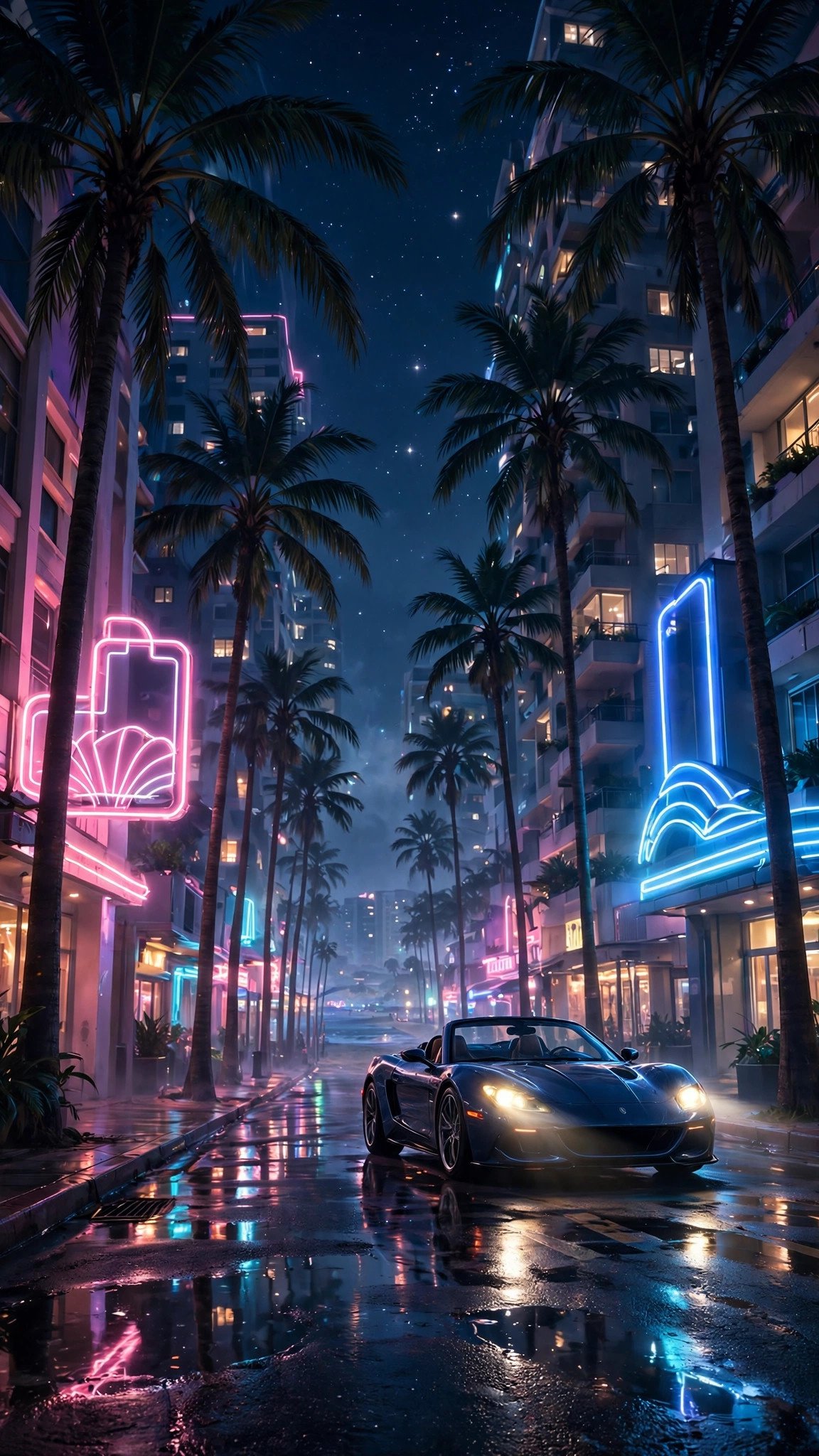
Vice City has never really needed a budget headline to explain its reputation. Ask players what they remember and they talk about neon, palm trees, a pastel skyline, a radio dial full of borrowed hits, and a story that turned a small-time enforcer into the owner of a criminal empire. Yet the money behind that world is part of why it worked so well, and it is the question readers keep searching for: how much did GTA Vice City cost to make? The widely repeated answer is roughly $5 million. That figure is best understood as the development budget, not as a single, audited total for everything that ever touched the game, and once that distinction is clear, the number starts to make sense rather than sounding like a typing error.
So where does the $5 million figure come from? It is the number that has circulated for years in summaries of the game’s production, and it sits alongside another, smaller number you will sometimes see quoted on social media: around $3 million. Neither should be treated as a precise invoice. The sensible reading is that the core development effort cost in the low single-digit millions, with the exact total moving depending on whether a source counts only the studio’s development work or folds in other spending as well. What is not in dispute in the broader record is the scale of the team and the schedule: a core group of roughly 50 people at Rockstar North, working for about eighteen months, and a project described at the time as the studio’s most expensive game to date. That last detail matters, because it shows how quickly the ceiling was moving in that era. A game that was unusually costly for its maker still cost a fraction of what a modern blockbuster costs.
What did roughly $5 million actually buy? It bought a complete, confident open world rather than a sketch of one. Players got a sun-soaked city with two main islands, beaches and a downtown, drivable boats and helicopters alongside cars and bikes, and a set of businesses that Tommy Vercetti could buy and run, from a taxi firm to a film studio, a nightclub and a print works that doubled as a front. It bought a story with a strong lead performance and a cast that gave the city its voice, and it bought a soundtrack built from licensed songs that did more for the atmosphere than any amount of scenery alone could have done. The soundtrack is a useful reminder of where costs can hide: licensing well-known music is not free, and a radio station full of era-defining tracks is part of the production spend even when it is not counted in a neat development total. That is one reason different totals disagree, and why a single headline number should always be read with its definition attached.
The second reason Vice City could be made for so little, by modern standards, is that it did not start from nothing. It built on the engine and the open-world systems of the game before it, which meant the team was refining a working foundation rather than inventing one from scratch. That is a very different kind of spending from a project that has to solve its basic technology, its tools and its world-building pipeline all at once. It also explains the eighteen-month schedule: a focused team, a proven base, and a clear creative target. The target was not photorealism or a living city simulated down to the last pedestrian routine. It was style, music, attitude and a map that felt bigger than it was because every district had a distinct look and sound. Spending discipline and creative discipline were the same thing here.
It is tempting to adjust $5 million for inflation and declare the comparison closed, but that adjustment only goes so far. Even after allowing for price changes over the intervening years, the result is still a modest sum next to a modern open-world budget, and the reason is not mysterious. Salaries, team sizes, asset counts, voice recording, motion capture, online infrastructure, testing across many platforms and languages, and years of post-launch support have all grown far faster than general prices. A modern blockbuster is not simply an old game with its prices updated. It is a larger organisation doing more kinds of work for longer, and that is where the money goes. Vice City, by contrast, could be held in the heads of a small core team. That intimacy shows in the game: its jokes land because the writers knew exactly what world they were building, and its missions feel hand-shaped rather than procedurally filled.
The commercial side of the story is why a $5 million budget still gets talked about at all. Vice City was a major commercial success, selling many millions of copies and becoming one of the defining games of its generation. That success is also why the usual shorthand about gross revenue needs care: the money players paid for copies is not the same as profit, because retailers, platform holders, manufacturing, distribution and marketing all take their share before a publisher’s return is counted. Even so, the gap between a low-single-digit-million development cost and a blockbuster sales performance is enormous, and it explains why Vice City is often held up as the classic example of a game that earned far more than it cost to build. It also gave its maker confidence to spend more on the next entries, because the formula had proved it could carry a bigger investment.
Set Vice City beside the rest of the series and the shape of the industry’s growth becomes plain. Vice City sits at roughly $5 million, its successor San Andreas at roughly $10 million, and then the numbers jump in a way that has little to do with ordinary inflation. The next major leap put a later entry at around $100 million, the following one at roughly $265 million in total once development and marketing are combined, and the upcoming entry is discussed in estimates running to $1 billion to $2 billion or more. Each step reflects a new expectation: larger maps, more detailed characters, more systems, more recorded dialogue, more testing and more marketing to reach a global audience on day one. Vice City is the starting point of that ladder, not an exception to it. It shows what the series looked like before those expectations became normal.
That history is also why the return to this setting in GTA 6 carries so much weight. The new game is set in Leonida, the modern version of the Vice City region, and it is arriving with a budget that is estimated to be hundreds of times larger than the original Vice City’s. The contrast is the point, not a trick. Where the original used a small team, a borrowed engine and a strong musical identity to suggest a whole city, the new game is expected to build a far larger and more detailed version of that world, with far more people, systems and recorded material behind it. Fans are not comparing the two games to say one is better because it cost more. They are comparing them because the first game proved that this particular setting, with its beaches, neon and criminal ambition, could carry an entire open world on a modest budget, and the new game now has to justify a vastly larger one by making that world feel richer rather than simply bigger.
A few questions come up so often that they deserve direct answers. Was Vice City really only $5 million? In the sense most summaries use the term, yes, roughly that for development, with the caveat that other costs such as marketing, licensing and distribution sit outside that headline in some counts, which is why you also see a lower figure in some places. Did it make its money back? By any reasonable reading, many times over in gross sales terms, even after the usual deductions for the chain between player and publisher. Could a game like Vice City be made for $5 million today? Not with the same visual detail, voice work, online features and platform expectations, although a smaller, more focused game with a similar spirit could still be made for a modest budget if it accepted a smaller scope. And why does the number still matter? Because it marks the moment when the series learned that a strong setting and a confident story could do more work than raw spending, a lesson that is still relevant when the next game arrives with a budget hundreds of times larger.
Related reading on Glanteen: https://glanteen.com/gta-6-development-budget-everything-we-know-about-the-cost-the-team-and-the-making-of-rockstars-biggest-game/ https://glanteen.com/how-much-did-gta-san-andreas-cost-to-make-the-under-10-million-classic-behind-gta-6/ https://glanteen.com/gta-6-countdown/ https://glanteen.com/gta-6-real-miami-vice-city-burger-shot-cluckin-bell/ https://glanteen.com/gta-6-price-everything-you-need-to-know-2026-official-guide/ In short, Vice City remains the clearest proof that a small, focused budget can produce a lasting open world when the setting, story and music are right. Its roughly $5 million development cost, its fifty-person core team and its eighteen-month schedule belong to a different era of game making, and the contrast with the scale expected from GTA 6, due November 19, 2026, is exactly why the old number still fascinates readers. The question was never only how little it cost. It was how much it achieved with so little, and why that achievement still sets the standard for the return to Vice City.